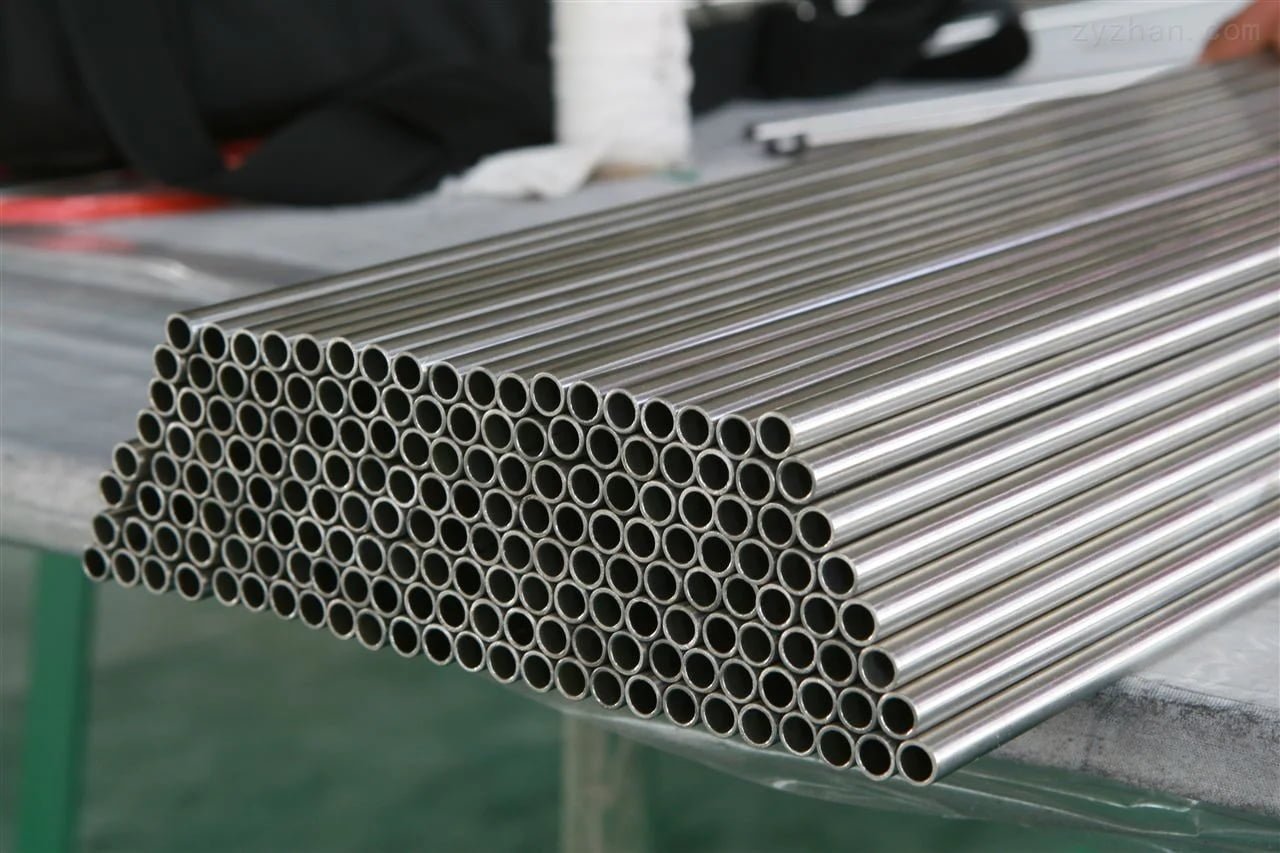
A seamless tube is manufactured without creating a longitudinal welded seam.
Unlike welded tubing, the tube is not made by simply forming a strip or plate and joining the edges.
Instead, seamless tube production typically begins with a solid billet, hollow shell or mother tube that is progressively formed, reduced, heat treated and inspected until the required dimensions and properties are achieved.
The exact manufacturing route depends on:
- material grade;
- tube diameter;
- wall thickness;
- final length;
- application;
- dimensional tolerance;
- inspection requirements.
Step 1: Raw Material Selection
The process begins with the correct raw material.
For stainless steel and special alloy tubing, the material grade must match the project specification.
Typical material families include:
- austenitic stainless steel;
- duplex stainless steel;
- super duplex stainless steel;
- nickel alloys.
At this stage, material identification and heat-number traceability should already be established.
For critical industrial projects, traceability should continue through the entire production and inspection process.
Step 2: Billet Preparation
For conventional seamless pipe production, a solid round billet is prepared for forming.
The billet quality affects the later tube geometry and internal quality.
Important factors include:
- chemical composition;
- surface condition;
- billet dimensions;
- material uniformity.
The raw material must therefore be verified before the main forming process begins.
Step 3: Piercing
The billet is heated and pierced to form a hollow shell.
This is one of the defining steps in seamless pipe manufacturing.
Because no plate edges are joined together, the tube is formed without a longitudinal weld seam.
Piercing quality influences:
- concentricity;
- wall thickness;
- internal surface condition;
- dimensional stability.
Any instability at this stage can carry through into later production.
Step 4: Hot Working and Sizing
After piercing, the hollow shell may go through additional hot-working processes.
These operations progressively control:
- outside diameter;
- wall thickness;
- length;
- tube geometry.
For larger seamless pipe, hot forming provides the basic shape before further sizing or finishing.
Step 5: Cold Rolling or Cold Drawing
When tighter dimensional tolerance or improved surface quality is required, the tube may undergo cold working.
Typical processes include:
- cold rolling;
- cold drawing.
These processes help improve:
- OD accuracy;
- wall-thickness control;
- surface finish;
- mechanical consistency;
- dimensional stability.
Several reduction passes may be required before the final dimensions are reached.
BAOFENG’s documented manufacturing routes include piercing, cold rolling / drawing and multiple heat-treatment processes across its seamless and specialty tubing production systems.
Step 6: Heat Treatment
After deformation, stainless steel and special alloy tubing usually requires controlled heat treatment.
Depending on product type and material, this may include:
- solution annealing;
- bright annealing;
- vacuum heat treatment;
- other controlled thermal processes.
Heat treatment affects:
- mechanical properties;
- residual stress;
- corrosion resistance;
- metallurgical structure;
- final surface condition.
Correct control of temperature, holding time and atmosphere is therefore critical.
Step 7: Straightening or Coiling
At this stage, the manufacturing route depends on the required final product form.
Straight Seamless Pipe or Tube
For conventional straight products, the tube may undergo:
- straightening;
- cutting;
- end finishing;
- sizing;
- surface treatment;
- inspection.
The finished length is then prepared according to the project or standard requirement.
Seamless Coiled Tubing
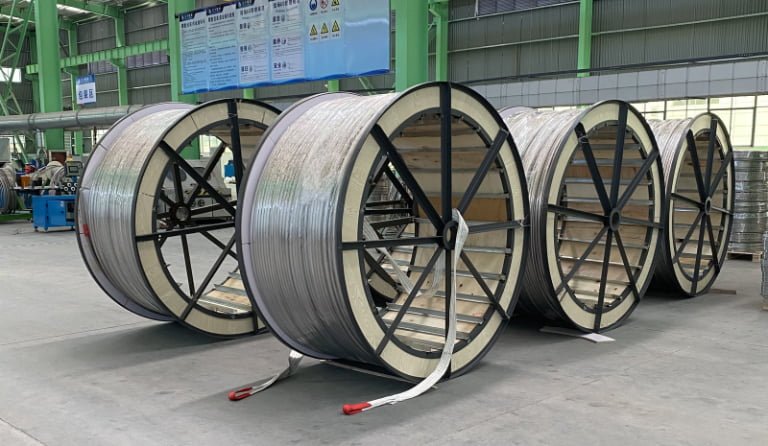
For ultra-long seamless tubing, the process is more specialized.
The tube must continue through repeated controlled reduction, heat treatment and long-length processing until the required continuous length is achieved.
The tube is then coiled or recoiled for final delivery.
This requires stable process control over a much greater length than conventional straight tubing.
What Makes Ultra-Long Seamless Coiled Tubing Difficult to Manufacture?
Producing a short seamless tube and producing a multi-kilometer seamless coil are very different manufacturing challenges.
As the continuous length increases, consistency must be maintained across the full tube.
Key areas include:
- OD consistency;
- wall-thickness consistency;
- heat-treatment uniformity;
- surface quality;
- internal cleanliness;
- mechanical properties;
- NDT continuity;
- coiling geometry;
- handling protection.
This is why ultra-long seamless coiled tubing is a specialized manufacturing capability rather than simply a different packing method.
BAOFENG’s seamless coiled tubing product range includes continuous lengths up to approximately 4,000 m depending on dimensions.
A documented BAOFENG proof point is a SAF2507 9.53 × 1.65 mm seamless single coil with a continuous length of 4,050 m.
For chemical injection, hydraulic control and other long-distance systems, this continuous construction can reduce intermediate joints and potential leakage points.
Step 8: Surface Finishing
After heat treatment and dimensional processing, the tube may require surface finishing.
Depending on the specification, this may include:
- pickling;
- bright finishing;
- cleaning;
- polishing;
- internal cleanliness control.
Surface requirements depend heavily on the final application.
For example, instrumentation, chemical service and heat-transfer tubing may have different cleanliness or roughness requirements.
Step 9: Dimensional Inspection
The finished tube must be checked against the specified dimensions.
Typical inspection points include:
- outside diameter;
- wall thickness;
- length;
- straightness;
- ovality;
- surface condition.
For continuous coiled tubing, dimensional consistency must be maintained across very long lengths.
Step 10: Non-Destructive Testing
Non-destructive testing is used to identify defects that cannot be reliably confirmed through visual inspection alone.
Depending on the specification, methods may include:
- Eddy Current Testing;
- Ultrasonic Testing;
- X-ray / radiographic inspection;
- penetrant testing.
The selected NDT method should correspond to the product form and project requirement.
Step 11: Pressure and Mechanical Testing
Depending on the applicable standard or project specification, testing may also include:
- hydrostatic testing;
- tensile testing;
- flattening testing;
- flaring testing;
- hardness testing.
Certain materials or service conditions may additionally require:
- intergranular corrosion testing;
- metallographic examination;
- PMI or chemical verification.
BAOFENG’s documented QA system includes NDT, pressure testing, mechanical testing, metallography, material verification and corrosion-related inspection capability.
Step 12: Marking and Traceability
Manufacturing is not complete until the product can be clearly identified and released with the required documentation.
Depending on project requirements, final documentation may include:
- material certificates;
- heat-number records;
- inspection reports;
- pressure-test reports;
- dimensional reports;
- project marking;
- packing records;
- shipment documents.
The objective is to maintain a clear link between the finished tube and its manufacturing and inspection history.
How Does the Manufacturing Route Affect the Final Application?
Different applications place different demands on the tube.
For example:
Process piping
may focus on pressure, corrosion resistance and standard compliance.
Heat exchanger tubing
may require tighter dimensional and surface control.
Instrumentation tubing
may require precision dimensions and cleanliness.
Chemical injection lines
may require long continuous lengths and corrosion-resistant materials.
Subsea hydraulic control lines
may combine high pressure, corrosion resistance and kilometer-scale continuous tubing.
The manufacturing route should therefore be selected around the actual service requirement rather than applying one process to every application.
Seamless Tube Manufacturing at BAOFENG
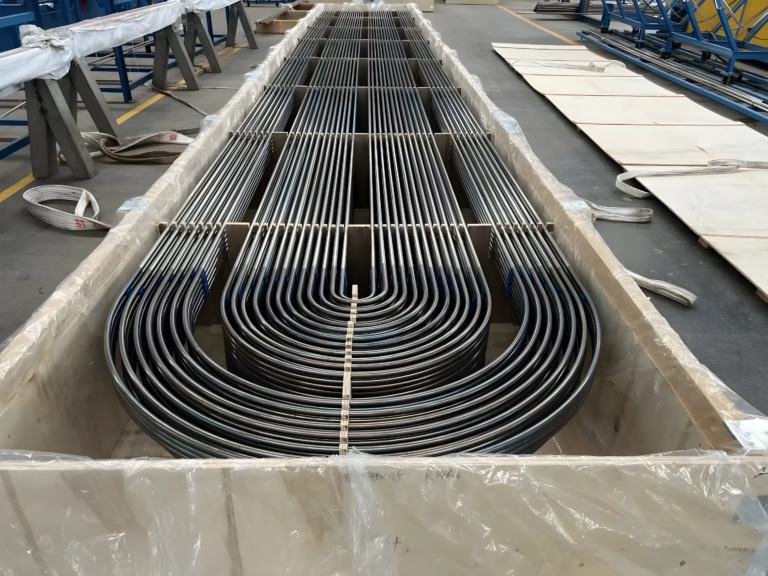
BAOFENG operates multiple tubular manufacturing routes covering seamless pipe, welded pipe, heat exchanger tube and coiled tubing.
Its production infrastructure includes piercing, cold rolling / drawing, heat treatment, precision coiling and inspection processes.
For specialized long-length applications, BAOFENG also manufactures seamless coiled tubing in stainless steel, duplex, super duplex and nickel alloy materials for chemical injection, hydraulic control, instrumentation, offshore and subsea service.
Conclusion
The industrial manufacturing process for seamless tube can be summarized as:
Raw Material
→ Piercing
→ Rolling / Drawing
→ Heat Treatment
→ Sizing / Finishing
→ Inspection
→ Testing
→ Documentation
For ultra-long seamless coiled tubing, the process requires additional control over long-length reduction, heat treatment, inspection and final coiling.
The result is not simply a longer tube.
It is a continuous engineered fluid or control line designed to reduce intermediate connections in demanding industrial applications.
For project requirements involving pressure, corrosion resistance, long continuous lengths or specialized inspection, the manufacturing route should be confirmed together with the material, application and technical specification.

Leave a Reply