What Are the Common Problems with Seamless Pipe?
Seamless pipe is widely used in oil and gas, petrochemical, power generation, heat exchanger, marine and other industrial applications where pressure, corrosion resistance and reliability are important.
Because seamless pipe has no longitudinal welded seam, it is often selected for demanding service conditions.
However, seamless construction alone does not guarantee reliable project performance.
Problems can still occur during material selection, manufacturing, heat treatment, inspection, documentation or installation.
Understanding these issues early helps reduce technical mismatch and unnecessary rework later in the project.
1. Wall Thickness Variation
Wall thickness variation is one of the most common dimensional concerns in seamless pipe manufacturing.
During piercing, rolling and cold-working processes, the wall thickness must be controlled around the full circumference and along the entire pipe length.
Excessive variation may affect:
- pressure performance;
- machining and fabrication;
- weight calculations;
- bending behavior;
- dimensional compliance;
- downstream equipment installation.
For critical applications, nominal wall thickness alone is not sufficient.
The applicable standard, tolerance range and project-specific requirements should all be confirmed before production.
2. Outside Diameter and Ovality
Outside diameter and ovality can affect fit-up, welding, bending and equipment assembly.
This becomes particularly important in applications involving:
- heat exchangers;
- tube sheets;
- precision instrumentation;
- machined connections;
- control lines;
- closely toleranced fabrication.
Even when the material grade is correct, dimensional inconsistency can create additional fabrication work.
For project-based supply, dimensional inspection should therefore be part of the manufacturing and final-release process.
3. Straightness Problems
Straightness is another important factor for conventional seamless pipe and tube.
Poor straightness may cause difficulties during:
- automatic welding;
- pipe alignment;
- machining;
- equipment assembly;
- bundle installation;
- field fabrication.
The acceptable straightness requirement depends on product type and application.
Heat exchanger tubes, precision tubing and general process piping may all require different control levels.
4. Surface Defects
Surface condition can influence both appearance and long-term performance.
Typical concerns include:
- scratches;
- pits;
- laps;
- folds;
- dents;
- oxide scale;
- handling damage;
- surface contamination.
For stainless steel and special alloys, surface quality is particularly relevant because poor handling or unsuitable processing may affect corrosion performance.
Visual inspection, surface treatment and proper handling throughout production are therefore important.
5. Internal Surface Problems
Internal surface defects are more difficult to identify than external defects.
This becomes especially important for small-diameter tubing and long continuous tubing.
Depending on the application, internal concerns may include:
- roughness;
- internal scratches;
- oxide;
- folds;
- contamination;
- foreign material;
- local deformation.
For demanding projects, borescope inspection or specified internal-surface control may be required.
BAOFENG has supported project requirements involving controlled internal roughness and 100% borescope inspection for selected heat exchanger tubing applications.
6. Material Grade Mismatch
A seamless pipe can be manufactured correctly and still be unsuitable if the material grade does not match the actual service condition.
Material selection may depend on:
- chloride concentration;
- design temperature;
- design pressure;
- sour service;
- seawater exposure;
- aggressive chemicals;
- required design life;
- applicable project standards.
Typical material families may include:
- 304 / 304L;
- 316 / 316L;
- 321;
- 904L;
- Duplex 2205;
- Super Duplex 2507;
- Alloy 625;
- Alloy 825;
- C276.
The material should be selected according to the operating environment rather than treated as an isolated purchasing parameter.
7. Heat Treatment Problems
Heat treatment strongly affects the final properties of stainless steel and special alloy tubing.
Incorrect heat-treatment control may lead to:
- residual stress;
- inconsistent mechanical properties;
- reduced corrosion resistance;
- surface oxidation;
- unstable metallurgical structure.
Depending on the material and manufacturing route, solution annealing, bright annealing or other controlled heat-treatment processes may be required.
The heat-treatment route should match both the material standard and the final application.
8. Inadequate Non-Destructive Testing
Some defects cannot be identified through visual inspection alone.
Depending on project specifications, inspection may include:
- Eddy Current Testing (ET);
- Ultrasonic Testing (UT);
- Hydrostatic Testing;
- Radiographic Testing;
- PMI / Spectrometry;
- Mechanical Testing;
- Metallography;
- Intergranular Corrosion Testing;
- Borescope Inspection.
BAOFENG’s documented project capability includes PMI / spectrometer analysis, UT, ET, X-ray, hydrostatic testing, mechanical testing, metallography, intergranular corrosion testing and borescope inspection.
The correct inspection method should be selected according to the failure risk and service condition of the project.
9. Documentation and Traceability Issues
Industrial projects often require more than physical product compliance.
Documentation problems can delay technical approval even when the pipe itself meets the specification.
Common issues include:
- incorrect heat-number records;
- missing MTCs;
- incomplete inspection reports;
- inconsistent markings;
- unclear material traceability;
- missing project documents.
For EPC and project supply, material traceability should be maintained from raw material through manufacturing, inspection and final shipment.
10. Too Many Intermediate Connections
For small-diameter tubing systems, one additional issue is often overlooked: the number of field connections.
Even if every short tube is seamless, a system assembled from many short lengths may require many:
- fittings;
- connectors;
- joints;
- inspection points;
- installation operations.
Each additional connection introduces another potential leakage or maintenance point.
This is one reason ultra-long seamless coiled tubing can be valuable in applications such as:
- chemical injection;
- hydraulic control;
- SSSV control lines;
- instrumentation systems;
- offshore and subsea service.
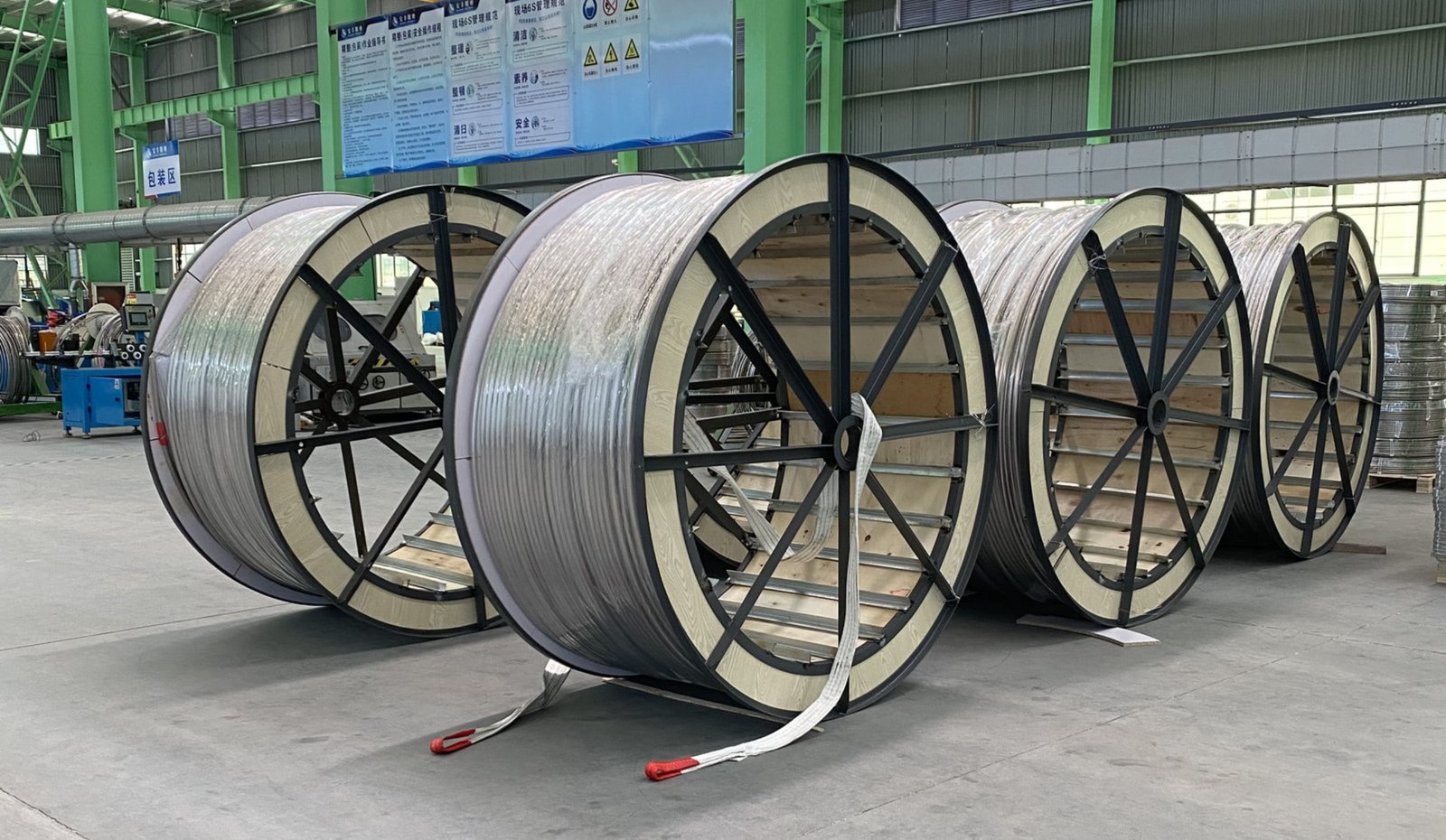
BAOFENG’s seamless coiled tubing portfolio includes continuous lengths up to approximately 4,000 m depending on size, with documented proof of a SAF2507 9.53 × 1.65 mm seamless single coil reaching 4,050 m.
Long continuous construction can reduce intermediate joints, potential leakage points and field installation work.
How Can These Problems Be Reduced in a Project?
Before production begins, the following items should be clearly defined:
- material grade;
- OD and wall thickness;
- dimensional tolerance;
- applicable standard;
- service medium;
- design pressure;
- design temperature;
- surface condition;
- required NDT;
- hydrostatic test requirements;
- MTC requirements;
- third-party inspection requirements;
- straight length or continuous coil length;
- packing and delivery requirements.
The earlier these technical points are confirmed, the easier it is to align the manufacturing route with the actual project requirement.
Conclusion
The common problems associated with seamless pipe are usually not caused by one single factor.
They often involve a combination of:
material selection + dimensional control + heat treatment + inspection + traceability + installation design
For demanding industrial projects, the key consideration is not only whether the product is seamless.
The more important question is whether the complete manufacturing, testing and documentation route matches the actual operating condition.
BAOFENG supports conventional seamless pipe and tube as well as ultra-long seamless coiled tubing for project applications requiring pressure integrity, corrosion resistance, inspection control and long continuous lengths.

Leave a Reply