What Is Seamless Tubing?
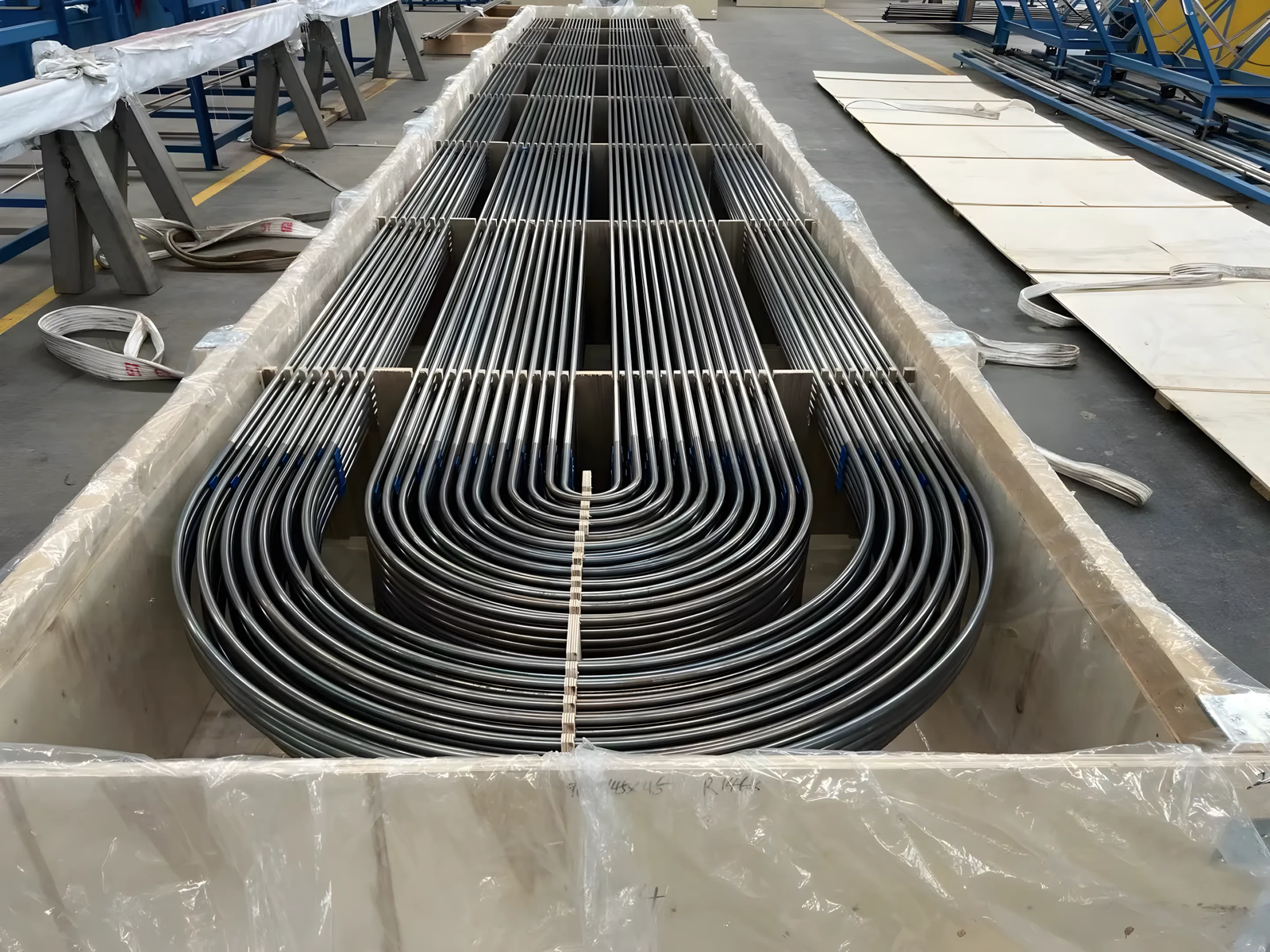
Seamless tubing is tubing manufactured without a longitudinal welded seam.
Unlike welded tubing, which is formed from strip, coil or plate and then welded along its length, seamless tubing is produced through a manufacturing route that creates a continuous tubular structure.
Depending on tube size and specification, the process may involve:
- billet preparation;
- piercing;
- hot working;
- cold rolling;
- cold drawing;
- heat treatment;
- sizing;
- finishing;
- inspection.
The absence of a longitudinal weld makes seamless tubing suitable for many applications where pressure, corrosion resistance, dimensional control or system reliability are important.
Seamless Tubing vs Welded Tubing
The main difference is the manufacturing route.
Seamless Tubing
A typical route may be:
Billet / Mother Tube
→ Piercing
→ Rolling or Drawing
→ Heat Treatment
→ Sizing / Finishing
→ Inspection
Welded Tubing
A typical route may be:
Strip / Plate
→ Forming
→ Welding
→ Heat Treatment / Sizing
→ Finishing
→ Inspection
Neither route is universally better.
The appropriate manufacturing route depends on the project requirement.
Typical factors include:
- pressure;
- diameter;
- wall thickness;
- material grade;
- service medium;
- corrosion environment;
- fabrication method;
- applicable standard;
- inspection requirements.
Where Is Seamless Tubing Used?
Seamless tubing is commonly used in:
- oil and gas;
- petrochemical processing;
- chemical injection;
- hydraulic control;
- instrumentation;
- heat exchangers;
- power generation;
- offshore production;
- subsea systems;
- high-pressure fluid systems;
- chemical processing.
The final product may be supplied as either straight-length tubing or continuous coiled tubing.
What Materials Can Be Used?
Seamless tubing can be manufactured from many stainless steel and special alloy grades.
Common material families include:
Austenitic Stainless Steel
Typical examples:
- 304 / 304L;
- 316 / 316L;
- 321;
- 904L.
These grades are widely used in process, instrumentation and heat-transfer applications.
Duplex Stainless Steel
Typical examples:
- Duplex 2205;
- Super Duplex 2507.
These materials combine high strength with strong corrosion resistance and are commonly considered for offshore, seawater and chloride-containing environments.
Nickel Alloys
Typical examples include:
- Alloy 625;
- Alloy 825;
- C276.
Nickel alloys are used where operating conditions require corrosion or temperature performance beyond conventional stainless steel.
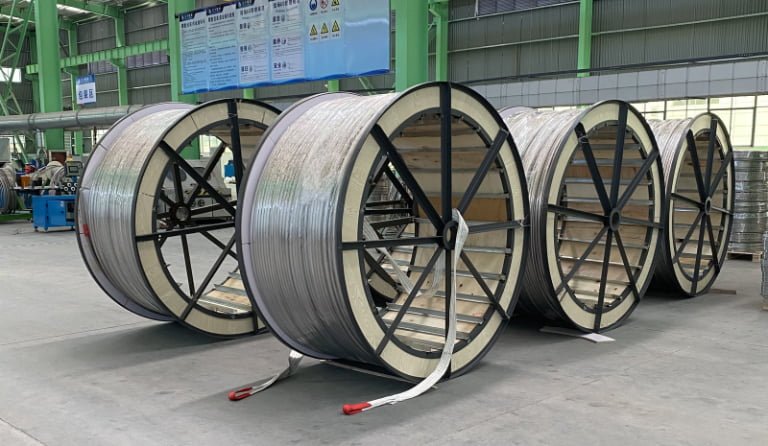
What Is Seamless Coiled Tubing?
Seamless tubing does not have to be supplied only in short straight lengths.
It can also be manufactured as seamless coiled tubing.
This format allows one continuous tube to run for hundreds or even thousands of meters.
Typical applications include:
- chemical injection lines;
- hydraulic control lines;
- SSSV control lines;
- instrumentation tubing;
- offshore hydraulic systems;
- subsea umbilicals;
- specialized fluid transmission systems.
BAOFENG manufactures seamless coiled tubing in stainless steel, duplex, super duplex and nickel alloy materials. According to product data, continuous length can reach up to approximately 4,000 m depending on tube size.
Why Is Continuous Length Important?
The main engineering benefit is not simply “a longer tube.”
The value comes from reducing intermediate connections.
A conventional tubing system built from short lengths may require multiple:
- fittings;
- unions;
- connectors;
- welded joints;
- inspection points.
Long continuous seamless tubing can reduce these intermediate connections.
That can support:
- lower leakage risk;
- simpler installation;
- fewer field connection points;
- reduced installation work;
- fewer maintenance points.
For short-distance service, this advantage may be limited.
For long chemical injection or hydraulic control routes, continuous length can become a major part of the system design.
BAOFENG has a documented example of a 4,050 m continuous seamless coil in SAF2507, 9.53 × 1.65 mm, designed for demanding high-pressure and corrosive service.
Is Seamless Tubing Always the Correct Solution?
No.
The manufacturing route should follow the project requirement.
Welded tubing may be fully suitable for many applications and may provide advantages in certain size ranges or project conditions.
The selection should consider:
- service pressure;
- corrosion risk;
- material availability;
- diameter;
- wall thickness;
- inspection level;
- installation method;
- fabrication requirement;
- total project cost.
In many applications, the important question is not simply:
Seamless or welded?
A more complete technical evaluation considers:
Material + Manufacturing Route + Length + Inspection + Documentation
How Should Seamless Tubing Be Specified?
A technical inquiry should normally include:
- product type;
- material grade;
- outside diameter;
- wall thickness;
- standard;
- required length;
- service application;
- pressure;
- temperature;
- inspection requirements;
- surface condition;
- quantity.
For coiled tubing applications, additional information may include:
- required continuous length;
- coil dimensions;
- installation method;
- transportation limitations;
- fitting or connection philosophy.
Seamless Tubing for Project Supply
The tube itself is only one part of a project supply package.
Project requirements may also involve:
- material traceability;
- heat-number records;
- MTCs;
- NDT reports;
- pressure-test records;
- third-party inspection;
- packing requirements;
- shipping documentation.
BAOFENG combines seamless tubing manufacturing with inspection and traceability support for industrial project requirements. Its documented QA capability includes PMI, UT, ET, X-ray, hydrostatic testing, mechanical testing and metallurgical inspection.
Conclusion
Seamless tubing is tubing manufactured without a longitudinal welded seam.
It is widely used where pressure, corrosion resistance, dimensional consistency and system reliability are important.
For long-distance control and injection systems, seamless tubing can also be manufactured in ultra-long continuous coils.
In these applications, the engineering value extends beyond the tube material itself.
Reducing intermediate connections can simplify the overall system and reduce potential leakage and maintenance points.
BAOFENG supports both conventional seamless pipe and tube requirements and specialized ultra-long seamless coiled tubing for oil and gas, petrochemical, offshore, heat-transfer and industrial project applications.

Leave a Reply